
Description

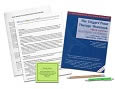
Trigger point therapy is a proven approach for the relief of soft-tissue pain and dysfunction. The textbook author, Clair Davies, NCTMB, provides a uniquely specific study of trigger point location and alleviation as well as specific cautions and contraindications. This course serves practitioners who want to better understand and reduce their own pain as well as those who want to help their clients. This course does not teach hands-on skills. Please seek additional experience, with a mentor, to add hands-on skills.

Back to top Enroll Now

Enrollment Options

Enroll Risk-Free! Examine our courses for up to 90 days and if you're not 100% satisfied by the quality or our service, your full tuition cost will be cheerfully refunded. Learn more about our guarantee.

Choose an enrollment type:
Materials and Test Shipped to You Contents: Text and workbook with multiple-choice test shipped to you. $120
OR
Text Materials Shipped and Test Online Contents: Text shipped to you. Online multiple-choice test. $120
Back to top

Content Outline

A New Life

  • A new technology; Mechanical ingenuity
  • A world of pain; Recurrent themes
  • Janet Travell and David Simons
  • The essentials; The price of ignorance
  • Trigger point science; The prevalence of TPs
  • Mistaken identity; Validation of TPs; A clear definition; The physiology of TPs
  • TP causes: Avoidable muscle abuse; Unavoidable muscle abuse; Unsuspected muscle abuse
  • Fibromyalgia
  • TP persistence: Physical factors; Nutritional factors, Metabolic factors and Psychological factors
 2.5 Hours

All About Trigger Points (TPs)

  • Finding TPs
  • Central TPs
  • Attachment TPs
  • The mystery of referred pain
  • TP symptoms
  • Referred pain
  • Compression of vessels and nerves
  • Autonomic effects
  • Problems with movement
  • Problems with mood
  • Dyslexia
 2 Hours

Key Trigger Point Massage Concepts

  • Troubleshooting
  • Body mechanics
  • Massage techniques
  • Deep stroking massage tips
  • Saving your hands and fingers
  • Understanding the therapeutic methods
  • Making the methods work
 2 Hours

Pain in Specific Locations and How the Author Triages Its Treatment

  • Head and Neck Pain
  • Shoulder, Upper Back and Upper Arm Pain
  • Elbow, Forearm and Hand Pain
  • Chest and Abdominal Pain
  • Midback, Low Back and Buttock Pain
  • Hip, Thigh and Knee Pain
  • Lower Leg, Ankle and Foot Pain
 2.5 Hours
Resources, Bibliography and References  
Open-book Test and Course Evaluation  1 Hour
Back to top Enroll Now

Testimonials

This is one of the most helpful courses I have ever taken! Lots of information.

Irene Thompson, CMT, Mt. Airy, MD

Great course! I already do some trigger point therapy, but this course increased my knowledge and understanding to a whole new level.

Elsie Lintz, M.T. Michael Alan Salon & Day Spa, York, PA

This class gave me skills that I immediately began using on myself. This practice gave me instant feedback, enhanced my learning and brought welcome relief to my own problem areas. I am already using techniques in my massage practice as well. Overall I loved the practicality and ease in learning of this course.

Ellen Eng, RN Massage Therapist, Carson City, NV

This was one of the most practical and interesting home courses I've taken and the drawings showing trigger points and referred pain areas for each muscle was very good and will be most helpful.

Donna A. Smirl, HHP

I was able to use this material right away to help my clients help themselves. There is so much information here. It is a wonderful resource to go back to time and time again. It is nice you keep the prices low and reasonable because not everyone has a big business.

Dawn - LMT

This is the most useful CE course ever! The textbook does a wonderful job clearly presenting the information in an easy to follow format incorporating multiple learning styles. It suggests numerous approaches for releasing TPs so both beginners, like my 14 y.o. daughter and professionals alike can obtain immediate results. This should be a must read for everyone. Thank you for offering a great course at an affordable price!

Cynthia Koscinch, LMP, CMA

I am inspired by the work of Clair Davies; his passion for the subject, as well as his objective data and anecdotal examples were fascinating. I am excited to try these techniques with myself and my clients.

Crystal C. Guengerich, RN, CMT Baltimore, MD

I loved the emphasis placed on anatomical landmarks. This course has opened my eyes to referred pain patterns and how to treat them effectively.

Claire Flippen, LMT, Vinton, VA

This course, along with the idea of teaching clients self-care, should be a required part of all massage school curriculum.

Becky, LMT, Corvallis, OR

Enjoyed the course, informative & positive! Thank you!

Jana Lee Hunter, LMP Jopun MO

I was glad to find a course that I could take on a text that I had already read extensively and interested me very much.

Jennifer Bellin, CMT Neenah, WI

This was one of the best continuing education classes I have ever taken. Very easy layout and easy to understand

Lisa Lutz Certified Massage Therapist Green Bay, WI

This was a very convient way to do the CEU requirements.

Margaret Makcey-Jones, CMT Gwynn Oak, MD

Quick and easy to do I like it! Fits my schedule and I learned a lot.

Mary Queen CMT Frederich MD Pearl Nails

I really liked this way of fulfilling my CEUs. It wasn't too time consuming and I actually liked the reading material. I learned a lot and know that this Trigger Point manual will come in handy definitely in the future of all my massages.

Meagan Moser Las Vegas, NV LMT

The best and simpliest method of understanding Trigger Point Therapy.

Michael Wilson, LMP - Maryland

Very informative. A must for every massage therapist.

Nikki Pricken Massage Therapist Riverdale, NJ

It was great to learn how to help clients and also myself through self massage.

Patty Tierney

This course was very educational and I feel I can definitely implement these producers into my massage.

Ronette Moore, NCMT, Amboy, IL

A great way to freshen up what you all ready learned in school but you WILL learn something new!

Silvia Smith, LMT NCTMB Henderson, NV

The materials (Book) provided was very profressional and well written. Great text for this course.

Tania Alvarez, LMT, San Diego, CA

It was very informative. Great class!

Tara Paccillo, NCBTMB North Brunswick, NJ

Great information, I'll keep the book out to refer too. I am using a lot of what I've learned and seeing wonderful results.

Unknown

This book was very informative and I will use it to help my patients in the near future.

Victoria J. Pendley, LMT,NMT

Back to top Enroll Now

Learning Objectives

  1. Identify what trigger points (TPs) are, how they are created and the ways they commonly manifest in the body
  2. Identify the prevalence and physiology of trigger points
  3. Identify how trigger points are caused
  4. Describe how to find many central and attachment trigger points
  5. Define the term "referred pain" and describe how to identify it in a client
  6. Identify ways to maintain healthy body mechanics and prevent injury to your hands when working on trigger points
  7. Using the textbook as a reference, identify the 2 most common trigger point locations in each of these areas: head and neck; shoulder, upper back and upper arm; elbow, forearm and hand; chest and abdomen; mid-back, low back and buttocks; hip, thigh and knee; lower leg, ankle and foot.
  8. Identify the self-massage techniques that clients can use to continue their therapy at home; how to treat your own trigger points, and how to prevent their return
Back to top Enroll Now

Sample Text

"Suboccipital Muscles

The suboccipital (sub-ahk-SIH-pih-tul) muscles are located right below the base of the skull; the occiput is the back of the head. The suboccipitals consist of four small muscles on each side, each running at a different angle, connecting the top two vertebrae to the skull and to each other (Figure 4.19).

Symptoms

Suboccipital trigger points cause pain that feels like it's inside the head, extending from the back of the head to the eye and forehead (Figure 4.20). It feels like the whole side of the head hurts. This sensation is typical of what you experience with a migraine headache. The treatment of suboccipital trigger points should be part of any approach to dealing with migraine (1999, 472-476).

Oddly enough, suboccipital trigger points don't usually cause neck pain. They can, however, play an important part in neck stiffness. The upper three suboccipitals on each side control nodding and tilting and can inhibit these movements if afflicted with trigger points. The lowest of the suboccipitals, the obliquus capitis inferior, connects the top two vertebrae where most of the rotation of the head occurs. This little muscle's trigger points restrict rotation and cause sharp pain high on the side of the neck when you've turned your head as far as it will go. This special muscle can be most effectively worked with supported fingers. The opposite hand crosses over in front so that both hands reach behind from the same side. It's the same tool as illustrated in Figure 4.47, except that the fingers are placed behind the ear just below the base of the skull." (The Trigger Point Therapy Workbook 2nd ed. by Clair Davies, NCTMB, 2004, p. 62-63)

Back to top Enroll Now

Sample Test Question

Trigger points in the suboccipital muscles usually cause pain in the:

  1. shoulders
  2. top of the head
  3. side of the head
  4. throat
Back to top Enroll Now

Customers enrolled in this course also purchased:

NCBTMB Approved Provider #049478-00

©2012 Natural Wellness, Inc. All Rights Reserved

2331 State Route 17K, Montgomery, NY 12549

Toll Free Phone: 1-800-364-5722
Mon-Fri, 9am - 5pm EST