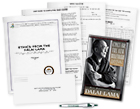


Tibetan Massage and Relaxation
Description
This beautifully illustrated course introduces the core principles of the ancient Tibetan yogic practice of Kum Nye. This course includes breathing exercises, sitting postures, stretching movements and massage. It is suitable for persons of all ages and fitness levels. It provides helpful preparation for seeking hands-on training. This course does not teach hands-on skills. Please seek additional experience, with a mentor, to add hands-on skills.
Back to top Enroll NowEnrollment Options
Enroll Risk-Free! Examine our courses for up to 90 days and if you're not 100% satisfied by the quality or our service, your full tuition cost will be cheerfully refunded. Learn more about our guarantee.

| Choose an enrollment type: | |||
|---|---|---|---|
| Text Materials Shipped and Test Online | Contents: Text shipped to you. Online multiple-choice test. | $170 | |
| OR | |||
| Materials and Test Shipped to You | Contents: Text and workbook with multiple-choice test shipped to you. | $170 | |
Content Outline
Discovering Kum Nye Context: Buddhism & Tibetan medicine
|
1.5 Hours |
Sitting and Breathing
|
1.5 Hours |
The Self-Massage Sequence
|
2.5 Hours |
The Inter-Relatedness of the Core Concepts of Gentle Movement:
|
2.5 Hours |
Understanding the Core Concepts of Balance and Integration:
|
2.5 Hours |
The Core Concepts of Stimulation and Transformation
|
2.5 Hours |
| References | |
| Open-book Test and Course Evaluation | 1 Hour |
Testimonials
Wonderful compliment to energy work and stress management.Patricia Dooley Certified Holistic Stress Management Specialist
I loved this course!Vivian Beran NCMT
I enjoyed this course! I think it will be beneficial to myself then to clients. I look forward to putting the concepts into my personal daily practice. Thank you!P. Williams, CMT, NCTMB
Learning Objectives
- Identify and describe key points in the history, definition and value of Kum Nye so that you can communicate it to clients, students and peers.
- Describe how to use your own body as the primary guide to the choice of Kum Nye exercises, including when and how to use them.
- Identify the sequence of self-massage techniques for taking care of and freeing up your healing energy.
- Identify the basic concepts that underlie all of the methods and relate them to each other, with examples.
- Identify the concepts and methods of balance and integration and describe how they can be incorporated into massage and bodywork practice.
- Identify how and why energy flows (or doesn't flow) and choose examples of how that awareness applies to your work.
Sample Text
"Participate in each exercise as fully as you can, involving your whole being-your heart, senses, awareness, feelings and consciousness. Bring all of yourself into the form of the exercise, allowing your negative as well as your positive feelings to be part of the experience. When you feel something, keep the energy of the feeling alive as long as possible, allowing it to expand and fill you. Broaden your feelings, letting them expand in every dimension of time and space.
The experience of each exercise has three characteristics: positive, negative and neutral. These terms are not judgments; it is as important to feel and work with negative qualities as it is to work with positive ones. Awareness of these qualities is an important part of each exercise: positive feeling can be recognized as a warm, soft and gentle sensation located primarily in the heart area; negative feeling tends to manifest itself as a dull, dark heaviness in the lower abdomen; neutral feeling possesses a quality of light, balanced stillness, which permeates the entire body and beyond into the surrounding space." (Tibetan Relaxation: The Illustrated Guide to Kum Nye Massage and Movement by Tarthang Tulku, 2007, p. 22-23)
Back to top Enroll NowSample Test Question
Neutral feeling:
- has a quality of light, balanced stillness
- permeates the entire body
- extends to the surrounding space
- all of the above

The Mind/Body Connection
Positional Release Techniques