



Cart
There are no items in your cart.
There are no items in your cart.
12 Hour CE Course
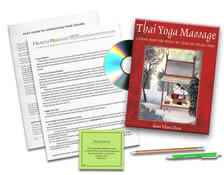
Do you have the Thai Yoga Massage textbook? See your enrollment options above for "I already own the text".
Discover how Thai yoga massage promotes physical, mental and spiritual well-being. This beautifully illustrated home study CE course introduces the core principles of Thai yoga massage and provides helpful preparation for those who are considering hands-on training. Concepts presented include the history, benefits and key elements of the practice, such as anatomy and physiology and contraindications from the Thai viewpoint and tips for integrating Thai concepts with Western health theory. An accompanying 45-minute DVD shows an expert Thai yoga massage practitioner giving a one-hour massage, with key points for effective body mechanics noted. This course also includes a list of resources for further study including hands-on training. This course provides conceptual preparation to seek additional training and does not teach hands-on skills.
| From Temple Art to Healing Art | 1 Hour | |
| Theoretical Foundations | ||
| Sen Lines | 1 Hour | |
| Doshas | ||
| Western medical principles | ||
| The Dancing Meditation of Thai Yoga Massage | 2 Hours | |
| Movement in Thai yoga massage | ||
| Rhythmic rocking dance | ||
| Working stances | ||
| Touch techniques | 2 Hours | |
| Breathing techniques | ||
| Staying connected | 1.5 Hours | |
| The Practitioner/Client Relationship | ||
| Contraindications | 1.5 Hours | |
| Introduction to the Practice | 1.5 Hours | |
| Sitting Postures | ||
| Double- and Single-Foot Postures | ||
| Sen Work on the Legs | ||
| Single-Leg Postures | ||
| Side-Lying Postures | ||
| Back-Position Postures | ||
| Double-Leg Postures | ||
| Abdomen, Chest, Arm and Hand Postures | ||
| Session Closure | 0.5 Hours | |
| Appendices: | 0 Hours | |
| Personal Health Questionnaire | ||
| Ayurvedic Constitution Questionnaire | ||
| Resources | ||
| Suggested Reading | ||
| Open-Book Test and Answer Sheet | ||
| Course Evaluation Form | 1 CE Hour |
This course is very informative and interesting. I enjoyed every minute of it.Carrie L. Clark, LMT, NCTMB, Collierville, TN
Very interesting and thorough - loved the book and DVD.Cheryl Matteo-Kerney, M.Ed., C.P.P.
I enjoyed this course. I love the relaxation and meditation this course offersJennifer Carole Smith, Spartanburg, S.C.
Very informative.Leverna Upton, LMT, NCTMB
I really enjoyed learning the material in this book and the DVD for better visual comprehension. I really like the Ayurvedic concepts in the material. I would definitely recommend it to anyone interested in learning Thai Massage... Thank you for offering this great home course!!!Brooke Liddell, LMT
I enjoyed thai massage and would love to further my knowlwdge.Carrie Ann Fredenburg, LMBT
Great course! Many things I can use in my practice for my clients and my own body mechanics. Thank You!Kelly Pettus, LMBT, NCTMB
I thoroughly enjoyed the course and look forward to adding it into my practice.Kathy Roberts, LMT
I really enjoyed this course. I really don't know how many hours I spent studying, but I did go over it several times. I learned a lot and am grateful that I took the course.Debbie de Montigny, LMT, NCTMB
Loved the course. It is interesting. Now i have a new way to help my clients.Jaime Harper, LMT
Awesome, fun, interesting techniques, loved the DVD 45 min session of thai yoga massage that was included. Can't wait to try the new techniques out !Chastity Garcia, LMP
Very informative and interesting course.Chasity Nwokocha, LMT
I enjoyed this course very much.Jim Kalinowski, LMT
Great course. the video was fantastic. This author was very well versed in Thai Massage, presented the material to learn well and provided a thorough way to learn Thai Massage.Nicolette Reiser, LMT
Loved it, very interesting and will be using this and practicing this massage.Jill Distler, LMT, NCTMB
This was an excellent course!Lorena Markezic, LMT, NCTMB
Very clear, informative. Namaste!Steve Oldham, CMT
I have always wanted to take a Thai Yoga Course and this one met my expectations..concise..easy..affordable..the text, dvd and certificate package was my first online course experience ..thank youVirginia Schneider Overstreet, LMT
Loved it!June Eaves, LMT, CMT
The Eastern approach in massage is always a good reminder for those that practice the Western approach in massage. In the moment, intention, breathing, letting go and loving kindness brings one to such a beautiful place when working with client. The application of Thai Yoga massage is a great addition.Eileen Ann Absenger, LMT, NCTMB
Thank you, I will recommend this course and your site to other therapists.Tammy Fontaine, LMT, NCTMB
I would love to give my clients this special thai yoga massage soon.Helen Leonard, LMT
Great course.I Learned a lot.easy to understand.I'm very happy to begin doing Thai Massage, and living a life of Metta.Steve Pearson, LMT, NCTMB
It was really great. I am excited to incorporate this into my practice.Roxanne Boucher, LMT
Excellent site! Thai Yoga was awesome I all defiintely use this material in my practice and refer this book to other therapist!Dayna Holtom
Great course, will recommend the Institute to others!Daniel Svensson, LMT
This is my second program I have taken. They are professionally done.George Andrews, LMT
Between the book and dvd no details were left behindGregory Hooker, LMT
I was so engrossed, I would be standing in line to go to Thailand to study further.Hajar Young, LMT, NCTMB
An excellent course! Very visual with lots of photos, explanations were to the point and the dvd was wonderful.Diane Whiteman, LMT, NCTMB
Great, I enjoyed it! Simple and easy to learn fun new things!Amber Seegars, LMBT
I loved this course....Great information!!!Gena Ramos, LMBT, NCTMB
The book provided was very informational. The video was easy to follow. The test was easy to read and perform. I appreciated being able to have my answers on a printed test and then take the test. Over all this has been a very positive experience.Nancy Eliason, LMT, NCTMB
I truly enjoyed this material and appreciate the way it was presented.David Toscano
This course provided a welcoming introduction and overview. I will practice techniques with family and co-workers and then introduce to clients. Makes me want to study and practice MORE.Pam A. McKenzie, LMT, NCTMB
Each time I have taken courses from Integrative Healthcare, I have learned new material, and have also been challenged on concepts that I previously believed I understood. This is an excellent learning experience.Tanisia Smith, LMT, NCTMB
I absolutely loved this course, and use the techniques extensively in my practice. I would recommend this course to anyone who may not have a chance to take the in-school module as the dvd is detailed and the book is great reference material. Thank you!Eva Wheeler-Sagiao, LMT
I really enjoyed this class. Kam Thye Chow is a wonderful author. I shall continue to research Thai Yoga techniques in the future thanks to his great introduction and clear explanation of this modality.Rita McNeil, NCTMB
This course was able to transmit the kindness and energy of a master practitioner through words and pictures in the book. I found many useful techniques and inspiration from this course.Dianne Arnold, LMT
I loved this course. I enjoyed that it was shown in photos the movements. Excellent course!!!!Pamela Forester, LMT
Been looking for a course on this level and traditional and this has exceeded my expectations for a home study. I just wish that as a Chinese trained practitioner the similarities would be expressed as in, marmas and meridians, that threw me a touch. Otherwise love that I have the info to review in my practice, thank you for this. It could not be much better.Michael Cameron, LMT
The materials for this course were well put together. I really like having a DVD for this one, since this type of massage is new to me. It is very easy to follow.Kristen Looney, LMT
Loved how this course delved into the history of Thai Yoga Massage and how it is connected to Ayurveda. The presenter was very thorough, yet explained the sequences in an easy to follow format, even explaining transitional flows. The course also explains benefits, contraindications, and practical applications for working with specific tridoshas. This course is full of practical information that is easy to add into your practice and expand upon.Sharon Leake
Overall high quality of course material and presentation. Feel blessed to have Kam Thye Chow as the presenter of this course. He made the stances and movements easy to understand and follow. I'll take more of his courses. Thank you to the Institute for providing this high quality, valuable course. Namaskar!Nancy Charbonneau Geertz, LMT
I found this course interesting. There are some techniques that I would like to implement and adapt into practice while still using a table. There are also some techniques that I will use in perhaps only very specific situations because we seem to be living in an aggressively sensitive societal structure these days. I appreciate the introduction to this modality and I am highly considering the continuation of the technique at the school in Montreal.Laura Van Roosmalen, RMT
This was my favorite CE course so far over the last 15 years. A high quality course. Very practical and concise explanations and well demonstrated in the pictures. I can't wait to put this to use and to learn even more about Thai massage!Keturah M. Gorospe, BCTMB
So glad I gained the knowledge of this beginner's Thai Yoga Massage course. It was straight to the point, the textbook matched with the video and it was easy to follow along with. Learning TYM will now be substituted into both my massage and yoga practices.Toren Hemphill
Great materials, clear and easy to understand and put into practice. I very much enjoy each lesson and use elements of each course in my practice.Hannah Davey, LMT
Great explanation and materials.Vianet Reyes-Garcia, LMT
I enjoyed the blend of energetic principles with practical physical applications and attention to a practitioners body mechanics that this course had to offer. The course book is descriptive and well presented.Lindsay Heck, LMT, BCTMB
I personally loved this Institute for the simple fact that I am a busy mom and full time worker and this was just so easy to do in my spare time so i GREATLY appreciate that!!Vanessa Rogers, LMT
Loved this course! Great materials, excellent topic. Good pick!Your Website is a wonderful service to busy Ontario massage therapists!Denise Harrison, RMT
The DVD was very valuable to translate what I was reading into seeing it in practice. I was able to practice on a person while watching the DVD and felt I learned more than just reading the text. Thank you! Printing out the test ahead of time allowed me to focus on the important answers, was able later to take test online without going back to it. Helped me retain the concepts better, thinking thru it as I took the online test.Patricia Batie, LMT, BCTMB
This is a course to enjoy and practice well beyond taking the test. At first implicating some moves into regular routine then expanding. Practicing on people and getting a floor mat. Really energized me.Pamela Tangen, LMT, BCTMB
I have been taking courses from you for many years and continue to learn new ways to enhance the experience of my clients. The Thai Yoga Massage course was full of great techniques that were clearly explained in the book and had excellent photos.Sierra Patterson, LMT
I absolutely loved this course. It held my interest and feels like something that I could easily incorporate into my massage therapy practice.Christine D Proctor, LMBT
I was looking for something I could actually use to enhance my current practice. I will start practicing on my family and friends and then offer it to my clients. I really enjoyed the book! The illustrations really helped me understand how to do it.Christine Alvarez, LMT, BCTMB
An excellent book, nicely explained and very interesting material. Thank you!Sonja Grozdanic, LMT
"Grasp the recipient's wrist and ankle and shift from sitting to standing (fig. 10.6). Walk backward, giving a gentle stretch to the recipient's thigh (fig. 10.7). When you feel resistance, stop walking and place your foot on the buttock, fixing it in position. Pull the leg by leaning back, providing flexion to the spine and stretching the thigh (fig. 10.8). The more beautiful and rounded the body arc is, the more successful the stretch becomes. Gently release the arm and leg and roll her onto her other side.
Benefits: Stretches the body from hand to foot; particularly beneficial for the stretch to the iliopsoas muscle complex, the deep muscles that connect the spine to the pelvis and thigh, increases flexibility to the midtrunk; tonifies internal organs and assists digestion.
Precaution: Fix your foot firmly on the recipient's buttocks, but do not apply pressure!"
(Thai Yoga Massage: A Dynamic Therapy for Physical Well-Being and Spiritual Energy by Kam Thye Chow, 2002, p. 105)
When you feel resistance during the "standing side arc," you should place your foot on the recipient's buttock, fix it in position and:
Enroll Risk-Free! Examine our courses for up to 90 days and if you're not 100% satisfied by the quality or our service, your full tuition cost will be cheerfully refunded. Learn more about our guarantee.

Take our free online course:
Ethics Refresher
We will not rent/sell your email to anyone. You'll also receive our newsletter and special offers.

Take our free online course: Ethics Refresher
We will not rent/sell your email to anyone.
You'll also receive our newsletter and special offers.
Thank you! An email will be sent to the address provided with instructions on how to enroll in this 1 CE hour course - FREE!
If you do not see our email within a few minutes of signing up, please check your Spam/Junk folders it may have been delivered there instead of your inbox.
If, by chance, you still have not received it within 5 minutes, please call us at 1-800-364-5722, Monday-Friday, 9am-5pm EST for assistance.
 Massage for Edema
 Oncology Massage: Fact vs. Myth