
Health Positive continuing education ncbtmb approved home study CE courses for massage therapists and bodyworkers Health Positive continuing education ncbtmb approved home study CE courses for massage therapists and bodyworkers
  Top » Catalog » Healthcare Massage CE Courses » Advanced Balance, Flexibility and Stability Improvement Help | Newsletter | My Account  |  Shopping Cart  |  Checkout   

Credit Card Merchant Services
Quick Find
 
Search for courses by title or keyword
 
Search by number of CE Hours.
Advanced Search
Reviews
more
Advanced Balance, Flexibility and Stability Improvement
I found the course to be very enlightening for self help whi ..
5 of 5 Stars!
Need Help?
Call us 24/7 at
1-888-797-5594
What's New? more

Body/Mind Package 2
$222.00
$177.00
Courses By Category
Fast Track to State License Renewal->
Downloadable Instant CE Courses
CE Package Specials
Animal Massage & Energy Work CE Courses
Body Psychology CE Courses
Bodywork/Traditional Massage CE Courses
Business and Marketing CE Courses
Energy Work CE Courses
ALL Ethics CE Courses and Packages
Ethics: 6 Hour CE Courses
Ethics Courses for NCBTMB Standard V: Roles and Boundaries
HIV and Communicable Illness CE Courses
Healthcare Massage CE Courses
Research and Science CE Courses
Self-Care CE Courses
Spa and Wellness CE Courses
Textbooks and CE Courses for Teachers
Therapeutic Massage CE Courses
ALL CE Courses->

Advanced Balance, Flexibility and Stability Improvement

12 Hour CE Course

  Print this Page

Home Study: Cognitive

This course requires a textbook that is not downloadable but the test and certificate are available online   

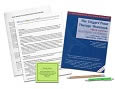
Description: This advanced course examines important terminology and techniques concerning musculoskeletal fitness and dysfunction and presents thoughtful and straightforward approaches that are clearly illustrated by photographs and drawings. The textbook, written by Leon Chaitow, ND, DO, provides a valuable reference for future use and includes bonus set of quick-reference exercise cards. This course does not teach hands-on skills. Please seek additional experience, with a mentor, to add hands-on skills.

Content Outline Learning Objectives Sample Text Sample Test Question
Enroll Risk Free
More Info Enrollment
$144.00
 
More Info Textbook
More Info Study Guide and Test
Total Enrollment:

Enroll Risk-Free! Examine our courses for up to 90 days and if you're not 100% satisfied by the quality or our service, your full Tuition cost will be cheerfully refunded.

 
Want to Save Time and Money or See the Test Before You Enroll in the Course?
  • If you have an account, Sign-in then return to this page and a FREE Download link will be visible. Click the link to Download the Study Guide and Test FREE.
  • If you don't have an account, Register for FREE then return to this page and your FREE Download link will be visible.
SAVE Money
Get Your Textbook Elsewhere
  • Any bookstore: New or Used (Amazon, Barnes & Nobles, etc.)

  • Any library

  • From friends

  • From your own bookshelf

  • If you want to get the textbook elsewhere, click the More Info icon to see the textbook details.
  • Content Outline

    The Different Forms of Muscle Energy Testing for Shortness in Muscles1 hour
    How the Author Tests for Shortness in Muscles
    1 hour
    How the Author Performs Functional Tests for Overuse and Tightness in Type 1 Muscles 1 hour

    Examining Chaitow's Muscle Energy Techniques:

    • Treatment and self-treatment methods
    • Associated problems
    2 hours
    Trigger Points and Their Importance in Pain Control1 hour
    Examining Chaitow's Self-mobilization Methods1 hour
    Examining Chaitow's Techniques for Testing Strength and Stability The Reasons for Weakness The Key Elements of Toning Exercise2 hours
    The Interconnectedness of Balance, Agility and Breathing1 hour
    Concepts Underlying Positional Release Technique; Strain and Counterstrain1 hour
    A Review of the Exercise Reference Cards
    Open-book Test and Course Evaluation1 hour

    [Enroll Now]

    Learning Objectives

    1. Define the following words/concepts: agonists; antagonists; concentric, eccentric and isometric contraction; reciprocal inhibition
    2. Describe the muscle energy techniques for the following: isometric contractions, isotonic contractions, isokinetic contractions
    3. List and describe type 1 and type 2 muscles
    4. Describe functional tests for two of the following: leg-raising, shoulders, arm-swinging, trunk flexion, sideways arm raising
    5. Describe shortness tests for three of the following: upper or lower hamstrings, low back, chest, pelvis to shoulder, scapula to neck, shoulders, arms, spine
    6. Identify appropriate muscle energy techniques for neck and neck-related muscles, chest and shoulder-related muscles, back, pelvis, leg muscles, jaw muscles
    7. Identify the associated problems for at least three of the above
    8. Describe the different methods of treatment for Trigger Points
    9. List and describe the flexibility exercises for three of the following areas: spine; upper, middle and lower back; trunk; side of the body, neck
    10. Identify appropriate techniques for testing at least three of the following: gluteus maximus; gluteus medius and minimus; deltoid; rhomboids and lower trapezius; deep neck flexor muscles; jaw stabilizers; internal obliques; diaphragm
    11. Describe the toning exercise for at least four of the above, as well as the different balance and breathing exercises and their purposes
    12. Describe the positional release technique and strain/counterstrain exercises for at least three of the following: chest muscles; neck rotation; strains of the lower back, neck, spine and joints
    13. Achieve at least 70% correct on the course test

    [Enroll Now]

    Sample Text

    "13. Pectoralis Major

    MET (PIR) position and method 

    • Lie on your back, on a table or bed, with the side to be treated close to the edge (right side in this example).
    • Your right arm should be outstretched to your side, palm upwards.
    • The edge of the bed should be supporting your upper arm just below the shoulder joint.
    • Depending on the angle of your arm from your trunk, different fibers of this large muscle can be stretched.  The fibers involved in any stretch will be in line with the position of your upper arm.  For example, if your arm is held so that it is elevated above the shoulder, the fibers will be those that attach to the lower sternum (abdominal fibers).  If the arm is held straight out sideways the fibers will be those that attach to the middle and upper sternum and if the arm is held so that it is angled downward, the fibers involved will be those attaching to the collar bone." (Maintaining Body Balance, Flexibility, and Stability: A Practical Guide to the Prevention and Treatment of Musculoskeletal Pain and Dysfunction by Leon Chaitow, 2004, p. 68-69

    [Enroll Now]

    Sample Test Question

    Which of the following is the proper MET position for the Pectoralis Major?

    1. lie prone with the upper part of your head over the edge of the bed
    2. lie supine with the side to be treated close to the edge of the bed
    3. lie supine with a folded towel under your shoulders
    4. sit on a chair, bend forward and tuck your chin to your chest

    [Enroll Now]


    This course was added to our catalog on Tuesday 19 June, 2007.
    Customers enrolled in this course also purchased

    Tibetan Massage and Movement

    Stress and the Body-Mind

    Universal and Standard Precautions

    Why Touch + Roles and Boundaries Package

    Staying Well: Alternatives to Antibiotics

    Positional Release Techniques for Muscle and Joint Problems

    Click here if you don't have Acrobat Reader.


    We subscribe to the HONcode principles
    of the Health On the Net Foundation.

    Credit Card Merchant Services

    Health Positive! - PO Box 18 - Wabash, IN 46992
    Toll Free Phone: 1-888-797-5594 - Fax: 317-448-4001
    Email: info@healthpositive.com
    webmaster@healthpositive.com

     
    Copyright © 2010 Health Positive!
    Powered by osCommerce
    Privacy Statement