



Cart
There are no items in your cart.
There are no items in your cart.
12 Hour CE Course
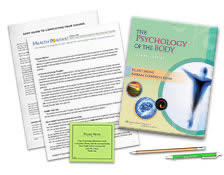
Do you have The Psychology of the Body textbook? See your enrollment options above for "I already own the text".
Through text and cartoons, this course shows you dynamic new ways to create individualized massage approaches for each client. Based on The Psychology of the Body by Elliot Greene and Barbara Goodrich-Dunn, this course explores the amazing connections between the mind and body and how these connections influence the body’s shape and the person’s responses. Learn new insights into the psychological factors that influence your work and client relations, including the profound dynamics of armoring; how to safely support your clients’ emotional responses, and how to confidently collaborate with mental health professionals. The textbook includes numerous case studies and suggestions for applying the concepts through self-directed exercises. The textbook is a valuable reference to use over and over. This course does not teach hands-on skills. Please seek additional experience, with a mentor, to add hands-on skills.
| The BodyMind Connection | 0.5 hour |
| Emotional Release | 1.5 hours |
| Armoring | 1.5 hours |
| The Disembodied, Collapsed and Compressed Character Structures | 1.5 hours |
| The Rigid Character Structures | 1.5 hours |
| Understanding Mental Health Conditions and Disorders | 2 hours |
| Working with Mental Health Professionals | 2 hours |
| Open-book Test and Course Evaluation | 1.5 hours |
Great book. Well-designed test.Elena Khazanova, MT, Silver Spring, MD
I really enjoyed this course and how it covered so much that we may be faced with throughout our careerMelinda Trudell, LMT Wakefield, RI
If you want to understand the body/mind - read this book! I loved this course. I want to go further as it inspired me to grow as a therapist and a person.Melissa M. Long - LMT - Alabama
This was an excellent course and a valuable & useful learning experience. I look forward to utilizing future course offerings.Robin A. Roth, LMT - Hartford, CT
Thank you so much for your insight! I learned so much, and opened my mind to new possibilities of understanding my clients on a whole different level.Robin Burkowski, LMT, Glenville, WV
Very informative and well done. It provided a lot of information that I had never heard in my last 10 years of practice.Ruth H. Brown, Inner Wizdom Dragon Spirit, Schenectady, NY
I previously ordered a different course that was not accepted by Texas and I had no idea. The staff contacted me, told me and asked if I wanted to switch courses. Just for that I am loyal and will only get my courses from you guys. I was very impressed by that level of customer service. Also the course work switched it out to was fun and interesting. I am very pleased.L. Wooley, RMT
I thought it was an excellent course; lots of valuable information that was presented clearly. I am very glad I chose it.Lynn Vrany, LMT, NCTMB
I found this course truly amazing and hold this level of professionalism in the utmost regard. I truly thank you for the ability to further my education through your services.Lowell Summers, LMT
The most intellectually stimulating online course I have taken. The test was also well-constructed. Thanks to the authors of the text for a weel-thought out and organized book.Manorama Rakhmanov, LMT, NCTMB
The textbook was excellent. I know I will continue to refer to this book for knowledge.Danielle Tiedeman, LMT
This course over exceeded my expectations, I was very pleased and interested.Rebecca Mantor, LMT, NCTMB
An incredibly informative course. I strongly recommend it for all Massage TherapistsDorothy Cullinane, LMT, NCTMB
Great course, thanks!Sally Swift, RMT
Great course. I think this should be an integral part of basic massage therapy school. Invaluable material.Jean Bottsford, LMT
Thanks for another great course! I highly recommend these ceu courses to all my therapist friends! :)Jennifer Barnard, LMT, NCTMB
Really good course. ThanksMelanie Proctor, LMT, NCTMB
I wish this course was included in the massage school I attended. It would have explained it alot better than the little book we had for boundaries.Karen Harrington, LMT
Best course yet.Mitzi Lloyd, LMT
I thought this class was excellent. Full of good, useful information. Thank you!Lauren Michaels, LMT
The textbook has illustrations which make it look lame, but the words and meanings of this text do reveal much. The material is well sourced in this text, and show authors who did their homework in putting together a book of substance.David Kauber, LMT
Very valuable information for my practice and my professional growth as a massage therapist.Catherine Joyce, LMT, NCTMB
Course was great and I gained a great deal of knowledge which I will be able to carry over into my day to day massage therapy as well as life in general. I would have liked to have had more information on why stress gathers in various body areas (ankles, wrists, knees, etc).Jennifer Salvo, LMT
My first online CE experience - interesting! thanks -Debra Howard, LMP
I'm glad I went with the Institute. They helped me in picking out a course. At first I thought PSYCHOLOGY OF THE BODY was going to be boring, but I was very wrong. It got my attention and before I knew it I was done reading it. Thank you.Vicky Dennison, RMT
One of my fav courses you have offered, and I have taken many.. :) thanks again for a great course!!Victoria Grindstaff-Redler, LMP
This is the best course that I have taken to date. I feel more confident and professional with my clients and more prepared within my boundaries, in supporting them with their emotional issues and therefore their body issues.Susan Whitcomb, LMT, NCTMB
I am glad that i can take these courses online....because of my busy schedules day to dayRoslyn Phillip, LMP
Enjoyed the book, intend to go back and read it at my leisure.Pamela Skotnicki, LMT, NCTMB
I appreciate the material, I learned a lot about myself. Thank you.Sally D. Gossett, LMT
After nearly 17 years of practicing massage therapy, The Psychology of the Body confirmed many of my intuitions about my experiences. I wish I'd read this book sooner; it should be a standard textbook in every massage school!Cameron Walker, LMT, NCTMB
The beginning seemed tedious and overstated but the obvious need for that was for people newly out of school. The psychological and body type information was facinating and I was glad to see the references to read further with those authors (A Lowwen, etc). Great book.Carolyn Ratliff, RMT, NCTMB
This is, without a doubt, the best continuing ed class I have taken.Leslie Malach, LMT, NCTMB
Provided much valuable information. I highly recommend :-)Trina Davis, NCTMB
Excellent course, easy to learn and follow....Maria Alaniz, RMT
The course contained information that will be very useful as my bodymind centered practice grows. Thank youGeorge Piers, LMT
I wish this material had been taught in massage school. It's a shame I had to wait 11 years before taking this course.Kristin Haas, LMT, NCTMB
Great topic. Very good text.Rebecca Threatt, RMT
Very interesting course.Sherri Cooley, LMT, NCTMB
Was blown away by the information I learned here. Now I have re read it so I can store it in memory...takes me awhile.Wayne Aaron, RMT
I very much enjoyed this online course of The Psychology of the Body.Maya Connolly, LMT
A really good course.Rodolfo Patlan, RMT
Course did not sound interesting when I selected it, but there are many topics that will help my practice in the future.Sylvia Freitas, RMT
This course has opened my mind and has made me motivated to work with people who suffer from mental disorders and addictions.I am grateful I took this course!Dawn Miller, LMT
Excellent course. I would recommend it to others.Yvette White, LMT
Great course..bought it cause it was on sale and found that it was very informative and interesting. I am very glad that I purchased this course!Tiffany Burke, LMP
This course was very insightful.Kathy Ogletree, LMT
This type of subject seems to be so intricate that I wanted to take my time and assimilate the information. I fully understand that with this 12 hour course that I CANNOT diagnose any type of mental illness. This course did help me understand the physical affects on the body that the mind and emotions have on us as humans; and that was of great interest to me.Rita Jackson, LMT, NCTMB
the reading material took me alot longer only because I am a detailed person and in order for me to keep the info on my head and not just read through it, a number of things had to be reread in order for the info to stick. this info should be mandatory in all massage therapy schools no questions asked.Allyson Jones, LMT, NCTMB
I thought that some of the information was too specific and while it was interesting to me as a student of human nature, I'm not sure it will have as much effect on my practice as a massage therapist. The nature of my relationship with clients both at the day spa and with my home practice (where I have more returning clients) is much more focused on the physical. I learned more than I will use, but still found the course valuable.Catherine Emery, LMT, NCTMB
While this is a great course for online, it did create within me a desire to take this as a live class at some point. Very interesting. Thank you.Vikki Baker, LMP, NCTMB
I have been practicing bodywork and teaching in massage schools for over 25 years, and I was very pleased with the book and the detailed information in the book.Judy Gray, LMT
I learned a great deal from the book. Thank you.Heather Sullivan, LMT, NCTMB
Very good course.Julie Weitz, LMT
It was harder than I thought it would be, but totally worth it! plus I did great!Orin C. Parnell, LMT
This is the first on-line course I've ever taken. Before I took it, I couldn't imagine taking a massage therapy course without "hands on". But this course was more about knowledge and understanding vs. technique. The insight I got out of this course is invaluable! I intend to take several more courses from your institute. Thank you for having such an extensive and diverse number of courses, and for your institution's organized, easy-to-follow system. Also, every time I called with questions, everyone I spoke with was extremely helpful, friendly, and courteous! Thank you again for this wonderful experience!Rita Johnson, RMT
I gained a lot of new knowledge regarding Psychology of the Body that I was not aware of.Rachel Murphy, RMT
Material was easy to understand and very informative.George Williamson, RMT
I found the information in this course very interesting. I could relate a lot of the content to specific clients that I have. This will surely help me treat my clients more accurately with an understanding of what is going on in their mind/bodyPamela Monaghan, LMT, NCTMB
I really liked this course and would recommend it to another person.Stephanie Coughlin, RMT
Very informative. It greatly added to my knowledge and skillsCharlene Lamb, LMT, NCTMB
I am going to thoroughly read this material I was on a time crunch but I have a psychology degree and this was really great information not only for my practice but my career in counseling. Thank you!Allison Harris, RMT
I actually had read the text a few years back and revisit it on a regular basis. This book changed how I practice massage therapy, and took me to a much higher level of understanding with my role as a healer. This book is, in my opinion, essential in the practice of massage therapy.Marsha Thompson, LMT, NTMB
This represented a new way of looking at the work that I have been doing. It will take additional study to fully understand exactly where all of this is leading.Clinton Pallister, LMT
Excellent course - should be required in massage school curriculum.Candice Gardner
This course was well put together and informative. I liked the way that the book flowed in a logical manner and was broke up into sections for each condition. The material was dry in places but I found it interesting over all.Cora Stewart, RMT
This was an excellent course, full of information and references to follow-up on. I thoroughly enjoyed this course!Donna Ford, CMT
Excellent text. Clear, thorough, applicable.Jim Reid, LMT
Very thoroughly researched and documented.Karen Mayr, LMT, NCTMB
I teach this course in a massage therapy school using this textbook. It was a good review for me. Nicely done.Trudi Taylor, PhD, LMBT
This course was the most informative and interesting that I have taken online! Thank you!!!April Witten, LMT
Was a very interesting cousre - I wish this was part of early on training for therapissits - the information is helpful to any practitioner.Sally Gallagher, LMT
One of the most helpful and useful courses I've taken, both professionally and personally. Good job!Robert Owens, LMT
The course was extremely well researched and written.Elizabeth M. Lewis Clark, NCBTMB
I thought it was a great course, well put together and informative. It has led me to further my interests in body psychology. Thanks.Kathyjo Welty, LMT
As with the Ethics portion of this text, this is the most difficult continuing education course I have taken. A lot of very good information coming from a totally different perspective. After twenty-five years in practice it is important to learn new information. The text will be a very good resource to rely on in the future. Thank you.Valerie Bower, LMT, NCTMB
I am very satisfied with the course. I will definitely come back for my CEU.Jesusa C. Laforce, LMT
I think the body/mind connection has the most applicable affect on most people's physical ailments and that this course should be mandatory for all massage therapists. I found the course fascinating and very informative with lots of case studies which made it more true to life.Lily Woll, LMT
I believe this should be a required course, especially for massage therapists and providers working with patients or clients they have to 'touch.' I loved it. It took me a while to get through the book. And I still have more to read. It truly pulls it all together and embodies the work we do together with our clients and in collaboration with other providers.Danette Mucaria, LMT, NCTMB
This course exceeded my expectations. there was so much new information and extra reading made available.Kathleen Fox, LMT
I really enjoyed learning about all the types of problems that my clients could possible be holding within their bodies. This course enabled me to recognize the signs and symptoms of these disorders and how to proceed in helping them through the correct massage techniques.Virginia Connors, LMT
I really enjoy this course and the material for this course is very well provided.Jaranya Burris, LMT
I am very happy with this course. I have information to deal with different character and attitudes on different behavior or conduct with special clients and I know I will have to read this edition frequently.Julian Guerrero, LMT
Overall I really enjoyed the material. The book has a lot of information and it is not meant to be skimmed though. This material is very in-depth and as a Therapist you have to take your time to read it and re-read it. I would not recommend it as an easy CEU to take and get through quickly. I took me 2 weeks to read through it and answer the questions.Mina Garcia, LMT
Thank you for making it interesting and easy to navigate.Michaela Lancaster, LMT
Although the materials were more extensive than any other online course study I've done, the price and quality of content cannot be beat. I would recommend this program to my friends.LaDonya Jenkins, LMT
Course was comprehensive but somewhat difficult as I have not taken a psychology course in many years.Stephen Philbrick, LMT, NCTMB
This course is very important to take at any stage, experience level of our profession as bodyworkers. It deepened my respect and interest in the complexity of our whole being and constitution that expresses itself through the body. A must for massage therapist.Esther Bannwart, LMT, NCTMB
This course is extremely through and informative. I would recommend it to any bodywork professional.Dorothy "Dollie" Gill, LMT
I enjoy using the Institute's offerings for my CEU's for their convenience, affordability, and variety. Living in Montana does not not give me a lot of opportunities for continuing education especially if I need to get caught up quickly- like this year! This particular course- "Psychology of the Body" was very good, although the text is a little heady. I think it should be more like a 16 hour + course if one is expected to read the material in depth. There is so much information in the text that I will definitely use it as a reference and go back over it at a much slower pace. I wish I had taken a course like this 20 years ago, and find the material helpful for understanding all kinds of relationships, and parenting too. Thanks to the authors who did such a fantastic and thorough job of researching and to Integrative Healthcare for offering it!Marcia Kaveney
The Psychology of the Body course is beyond excellent. A must for every LMT out there. Brings another dimension to my work. I particularly liked the treatments offered in Section III to address Armoring and Chronic Psychological and Physical patterns, Although my client base is everyday people, I am finding these patterns present and I now have more knowledge and technique to relieve and relax.Neva K. Yardum
Even though I worked in the Mental Health Field for many years I learned new material in the class. This class was very comprehensive and was informative. I think this class was very good at noting and explaining the differentiation of scope of practice of the Massage Therapist vs the Mental Health professional.Tina Griffith
I enjoyed this course. I actually took 2 courses using this textbook. The book was clear and contained useful case studies. My only slightly negative comment was that perhaps there should be a note on the overview page telling students that 1 course covered chapters 3 and 4 and the other chapters were a separate course. I took both,but it is nice to focus on 1 course at a time, even though the material is all connected... Thanks! Great course!Sharon Melnick
This was an amazing course and every massage therapist should take the course. Very detailed and explained the body mind connection in a deeper level. Highly recommend this course.Joy Sims
I am a Clinical Social Worker and I learned a phenomenal amount more in this book than I did in any single book I have ever read in undergraduate or graduate school. This course is full of fascinating information. There are an incredible amount of examples and case studies that illustrate every concept the writers describe. For anyone interested in psychology, you will not get a better description (and lots of great examples) of the defense mechanism, grounding and boundaries, archetypes, countertransference, transference, and so much more - as you will from this course. I am going to print this out and read it again and again because this book is a masterpiece of relevant, interesting, helpful, inspiring information that I want to know inside and out. I couldn't stop reading no matter how tired I got. I loved every paragraph of this book. It will exponentially increase the confidence you feel as a therapist. These writers are deeply knowledgable and clearly passionate about their subject!Melissa Potter
Since the program I attended was crammed into 2 semesters, we barely touched (no pun inteneded) upon the variety of situations/case studies mentioned in this course. This course gave me an overall better understanding of the variety of situations/clients I may come into contact with in this profession. I HIGHLY recommend this course!Jonny Ayers
Incredibly interesting! The content is thorough, easy to understand and apply. I will use this course in my future therapy work and will do more to learn about the body and its responses.Kathryn Woodford, CMT, BCTMB
Course is quite interesting. Lots of great info to apply and consider with clients you've seen for years or new ones. Particularly enjoyed the descriptions of body types, their tensions, and how different armoring forms different tension patterns.Robert J. Gray, LMT
Very thorough and enlightening course. Would like the course material to also be available in PDF even if ordered for delivery.Catherine A. Adkins, CMT, BCTMB
Excellent text book! Will make it a permanent part of my library.Brandi Jordania Goldberg, LMT. BCTMB
Great information. Broke the sections into manageable pieces due to the intense information. Took my time and it worked out well. Thank you!Leslie Jaquish, LMT
Thank you! Thank you! I have taken many of your classes through many years. Again I say - This one was the best yet!! Thank you again - I loved this class. It combined two of mt favorite interests the body/massage and psychology. The book & course- excellent.Audrey Jett, LMT
I loved this course and will tell my other Massage Therapist Colleagues.The information I learned here will be able to make my career more successful. Thank You and I will return.Jennie Lynn Langley, LMBT
"Psychology of the Body" is a phenomenal course! The text, of the same name, is dense with pertinent information regarding the Mind-Body connection, the psychology of the body and healing, how body therapies serve as psychological intervention, ethics pertaining to boundaries, limits, and scope of practice issues and much more! This text should be required reading for everyone whose practice involves working with the body in some way. I know that I will continue to use it as a very valuable reference resource for years to come. As a Massage Therapist and a Body Psychotherapist, I highly recommend this course!Dianna LeBeau, LMT
This course exceeded my expectations. It took a little longer to complete than I expected. I am overall happy that I chose this course.Kendra Smith, LMT
Course was great! Loved the text. It was much more than a 12 hour time investment however.Nancy Bloemer, LMT
This was a very interesting class. Challenging and enjoyable. Good job!Helen McFall, LMT
I particularly liked and agreed with the comments in the preface. I feel this course included all psychological aspects of human behavior. I also found it enlightening to see each personality type illustrated with great structural specificity. I was intrigued through every chapter.Teresa Jones, LMT
This particular course Psychology of the Body added a new layer to my knowledge of thinking as to how to approach clients physical issues. Really informative.Thirsa Scanlon, LMT
As a science instructor, this course from my point of view should be part of the body science education. Great course. I recommended to every massage therapist before even touching their clients. The information is has is a must for any massage therapist and beyond. It should be part of massage therapy education!! Thank you for producing such an amazing knowledge!!Naheel S. Bardaweel
I really enjoyed the course, much more in-depth than I had imaginedMICHAEL BUCKHAM, LMT
I loved the book...it was packed full of great information; Information I might have otherwise searched for through multiple books! (I know this because I have already done it.) This has always been my favorite subject and this writer didn't miss a thing. Thank you for providing such excellent study material!Carmelita Davis-Beets, LMT
I think every massage therapist should take this course, it has valuable information that can help improve your practice!Cayla Mayon, LMT
Great course easy to followKati Jones, LMP
I was very pleased with the caliber of the content and the presentation. Thank you so much!Diane Bourgeois, LMT
All the courses I have taken through the Institute for Integrative Healthcare Studies have been valuable and beneficial to my therapeutic massage practice. All the coursework is easy to understand, forth right, and the test questions directly relate to the text content. This particular course was especially beneficial as there is quite a bit of new materials pertinent to massage therapy today as compared to my original massage therapy training over 35 years ago.Barbara L. Ray, LMT, BCTMB
This course is one of the most valuable of all continuing education courses in more than 20 years as a massage therapist. Invaluable for any bodyworker that is serious about his/her craft!!!Randy Rudloff
A fascinating and engaging course teaching elements of psychology that is really helpful for massage therapists to be aware of, although rarely if ever taught in massage schools!Justin Lewis Samuels, LMT
I truly enjoyed this course and found it one of the most helpful CEU courses that I have taken. Much of this material was not covered in my training 20 plus years ago and I have only learned through experiences with clients. I have so many more tools now and have applied them already, allowing for deeper relaxation in my massage sessions. It took me a while to read through the material since I really wanted to learn and incorporate the material.Deanna Matthews, CMT, BCTMB
This was a fantastic course and should be added to the course of studies for students. I've been doing massage for 35 years and have experienced many of the situations explained in this course. It not only helps you to understand your clients but helps you to take a good look at yourself. This course has helped me be a better therapist. I think it should have more ceu's It took me longer than 12 hours to complete. I would highly recommend this course. You will not be disappointed!Gayla Chevalier, LMT
I truly enjoyed the course. It was informative,extremely educational and gave me a greater understanding of my work.Ruth A. Walsh
This particular course (Psychology of the Body) exceeded my expectations. Very interesting. Fascinating subject.Richard Vosburgh, LMT
This course amazed me. It has a bucket-full of information that is very useful to all massage therapists in interacting with clients and also being self-aware of the psychological issues that could arise. I find this information to be quite useful! Glad I took this course!Judith Nimtz, LMT, BCTMB
Great course for Massage Therapists. I would highly recommend it to all massage therapist.Kellie Putman, LMT, BCTMB
"...examples of acting out by clients with a collapsed structure are seeking to extend their time by complaining of one last little pain that needs some attention, asking one last question, or dressing slowly when it is time to end the session. Their acting out often eventually triggers rejection by others resulting from their slow but steady incursion on others' boundaries and the other person eventually reaching a limit and feeling 'they can't take it anymore.' Massage therapists can be drawn into this pattern. Because many massage therapists overdo caregiving, they tend to overextend giving to this type of client...To avoid repeating and reinforcing this pattern, making professional boundaries clear from the outset, holding them firmly, and saying no to uncomfortable, unrealistic expectations - even when it is difficult to do so - is critical for the massage therapist to do. The boundaries need not be rigid, but they do need to be firm." from The Psychology of the Body by Elliot Greene and Barbara Goodrich-Dunn (2004), page 175
Because massage therapists can be drawn into the collapsed structure’s pattern of acting out, therapists should

Enroll Risk-Free! Examine our courses for up to 90 days and if you're not 100% satisfied by the quality or our service, your full tuition cost will be cheerfully refunded. Learn more about our guarantee.

Take our free online course:
Ethics Refresher
We will not rent/sell your email to anyone. You'll also receive our newsletter and special offers.

Take our free online course: Ethics Refresher
We will not rent/sell your email to anyone.
You'll also receive our newsletter and special offers.
Thank you! An email will be sent to the address provided with instructions on how to enroll in this 1 CE hour course - FREE!
If you do not see our email within a few minutes of signing up, please check your Spam/Junk folders it may have been delivered there instead of your inbox.
If, by chance, you still have not received it within 5 minutes, please call us at 1-800-364-5722, Monday-Friday, 9am-5pm EST for assistance.
 Marketing Massage in Four Easy Steps
 Psychoneuroimmunology for Bodyworkers